GEO

Prompt Guide for Meta Titles and SEO Descriptions with AI

Raquel GIMENO

Let’s be honest: optimizing meta titles and meta descriptions can be a repetitive, time-consuming task that you’d rather spend on high-level strategy. If you’ve been experimenting with ChatGPT to speed up this process, you’ve probably already discovered something interesting: the results can be surprisingly good or disappointingly generic, and the difference lies entirely in how you talk to the AI. In this guide, we’ll explore the fundamentals of prompt engineering for meta tags and some techniques we’ve refined while working with different industries. You’ll find practical information that you can implement right away, although as in any specialized discipline, there are levels of sophistication that develop with experience and continuous practice.
The Difference Between Using AI and Mastering AI for SEO
You’ve probably tried asking ChatGPT something like “create a meta title about SEO” and got… well, something that technically is a meta title but that you’re not excited to use. This is completely normal and happens even to the most experienced professionals when they’re starting out with AI.
The real game changer happens when you start thinking of your prompts as complete briefings. Imagine you’re hiring a freelance copywriter: you wouldn’t just say, “Write something about SEO,” right? You’d give them context, objectives, information about your audience, examples of what you like and don’t like. With ChatGPT, it works exactly the same way.
The interesting thing is that this difference in approach can mark the line between meta tags that simply fulfill their function and meta tags that really move the needle in your metrics. And believe us, after working on hundreds of projects, we have seen that difference in real numbers.
Key Components of an Effective Prompt
Fundamental Structure
Let’s break this down in a practical way. A prompt that really works has several components that work together like a well-coordinated team.
First is role and expertise. It sounds a bit theatrical, but telling ChatGPT to “act as a senior SEO specialist” really does affect its responses. It’s not magic; it’s simply how the model is trained to contextualize its knowledge.
Then there are technical restrictions, and there is no room for ambiguity here. If you need a maximum of 60 characters, say so explicitly. If the keyword must appear, specify it. ChatGPT is incredibly capable, but it cannot read minds (yet).
The context of the content is where many people fall short. It’s not enough to say “write about digital marketing.” You need to share who your audience is, what makes your content unique, and what your competitors are doing. Think of it as giving AI the ingredients it needs to cook up something really good.
Finally, define your success criteria. What makes a meta title a winner for you? Are you prioritizing clicks, conversions, or brand building? This guides the entire process.
Example of Basic Structure
The difference between a basic prompt and a structured prompt is like the difference between telling someone to “cook something” versus giving them a recipe with specific ingredients.
What you’ve probably tried:
Write meta titles for an article on digital marketing
A more structured approach:
Act as a senior SEO specialist focused on on-page optimization.
Generate 3 meta titles for:
- Topic: [YOUR SPECIFIC TOPIC]
- Main keyword: “[KEYWORD]”
- Audience: [PROFILE]
- Maximum 60 characters
- Tone: [DESCRIPTION]
Includes character count per option.
Note how the second prompt gives clear direction without revealing your entire strategy. There is a balance between giving enough information and retaining certain elements for later iterations. This balance is part of the art of prompt engineering.
Specific Techniques for Meta Titles
Optimization for Different Types of Content
Not all meta titles are created equal, and your approach should change depending on the type of page you are optimizing.
For informational content:
Here, the challenge is to communicate educational value while keeping keywords natural. What we’ve found is that the best results come when your prompt includes information about how in-depth the content is and exactly who will be reading it. A “marketing professional” is different from a “CMO of a B2B company with 5-10 years of experience,” and ChatGPT responds differently to each.
For commercial pages:
This is where it gets interesting because you need to balance SEO with persuasion. The most effective prompts we’ve developed include information about what makes you different from the competition and what the strongest tangible benefit is. Of course, the exact way to structure this varies greatly depending on the industry (and this is where experience really counts).
For e-commerce architecture:
Categories are their own world. You need to communicate variety without being vague, include transactional keywords without sounding robotic, and stand out from competitors who are likely using similar phrases. We’ve refined our prompts for these cases through many projects, and honestly, specific construction is one of those things where professional expertise makes a noticeable difference.
Advanced Integration Elements
This is where things get a little more sophisticated (in a good way). Keyword integration isn’t just “putting the keyword somewhere.” Professionals think about:
- Where exactly to place the main keyword for maximum impact
- Which semantic variations enrich without saturating
- How to use modifiers that qualify the type of searcher you want to attract
- What elements will make you stand out when someone sees your result in the SERP
The way to structure your prompt to achieve this balance is something you develop over time. It’s like learning to play an instrument: the basics are accessible, but mastery comes with practice and deep understanding.
Strategies for High-Performance Meta Descriptions
Meta Description Architecture
Meta descriptions are fascinating because you have just 155 characters to hook, inform, and persuade. It’s like writing poetry with technical constraints.
A well-designed prompt can guide ChatGPT to create descriptions that work on multiple levels:
- They hook you in from the first 120 characters (because mobile is real)
- They integrate keywords in a way that sounds natural, not forced
- They communicate your unique value proposition
- They have that subtle touch of persuasion that invites clicks
- They respect technical limits without cutting sentences in half (because that looks terrible).
The trick is to balance all these elements without turning your prompt into a three-page manual. It requires prompts that set clear priorities with concise instructions.
Adapted by Search Intent
Something that makes a big difference is adapting your approach based on what the person is really looking for.
For informational searches:
You need to promise clear answers and real depth. The prompt should guide you toward language that communicates expertise without sounding like an academic paper. No one wants to read something that sounds like a doctoral thesis when they are looking for “how to do X.”
For transactional searches:
This is where elements of trust and immediate benefit come into play. The prompts that work best for us include information about unique value propositions and what sets you apart from the competition. Although, to be honest, the exact wording can vary quite a bit depending on what industry you’re working in.
For comparison searches:
This is particularly interesting because you need to communicate that you are impartial while simultaneously standing out. The professionals we’ve met (including ourselves) have specific techniques for structuring prompts that strike this balance, although the exact details depend on many contextual factors.
Iterative Refinement with AI
Progressive Optimization Process
Here’s one of the best-kept secrets: professionals almost never use ChatGPT’s first response as is. We follow a process:
- Initial generation with a well-structured prompt
- Critical analysis where we ask the AI to evaluate its own options
- Targeted refinement based on specific criteria that we know work
- Competitive validation by comparing against what is already ranking
This process isn’t simply saying “do it better.” Each stage uses specific prompts that build on the previous one. The exact sequence of how we do this (and how we construct each subsequent prompt) is part of that expertise that you develop over time and across multiple projects.
Comparison and Contrast Techniques
One technique we love is using ChatGPT to systematically compare our options against competitors who are already ranking. This involves prompts that ask for comparative analysis, identification of patterns in SERPs, and suggestions for how to strategically differentiate ourselves.
The interesting thing is that building these comparative prompts requires knowing exactly what competitive information to share and how to frame the comparison to gain insights you can actually use, not just superficial analysis that gets you nowhere.
Advanced Implementation Considerations
Integration with Professional Workflow
If you are managing multiple clients or large projects, efficiency becomes critical. You can’t be writing prompts from scratch every time.
Developing prompt libraries:
We (and most professional teams we know) have complete collections of prompts optimized for different scenarios. But beware, these are not simple templates copied from the internet. They are prompts that we have refined through real projects, measuring what works and what doesn’t.
Validation processes:
ChatGPT can generate content very quickly, but strategic validation remains entirely human. Our workflow includes several checkpoints where we evaluate not only whether it meets technical requirements, but also whether it is strategically aligned with the client’s brand objectives and competitive positioning.
Effectiveness documentation:
Something we do religiously is document which types of prompts generate the best results for different industries. This documentation becomes a continuously improving asset that sets amateur work apart from professional work.
Scalability Without Sacrificing Quality
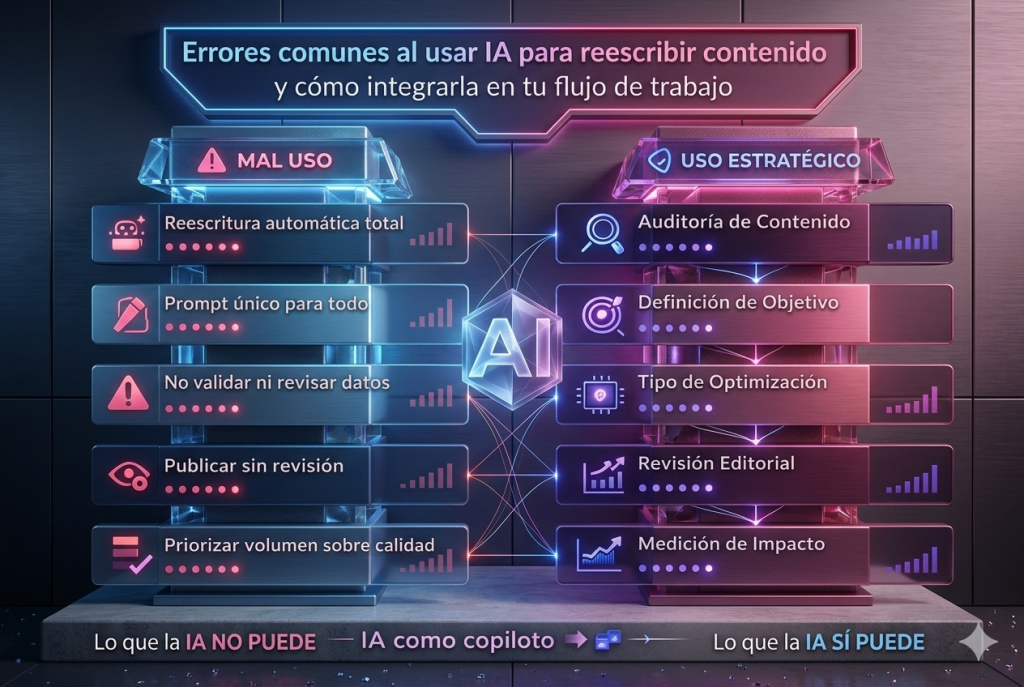
When you’re working on a large project, the temptation to use AI to process everything en masse is real. But here’s the thing: doing it wrong can seriously compromise quality.
The key is to identify which elements you can standardize and which ones need customization. There are specific techniques for intelligent batch processing that maintain brand consistency while adapting messages to different contexts. Implementing these techniques, however, requires an understanding of both how AI works and solid SEO strategy.
Common Mistakes and How to Avoid Them
Over-reliance on First Responses
Probably the most common mistake: using ChatGPT’s first response without refinement. Best practices always include generating multiple options and refining iteratively. But here’s the detail that many don’t know: not all iterations are equally effective.
Lack of Competitive Context
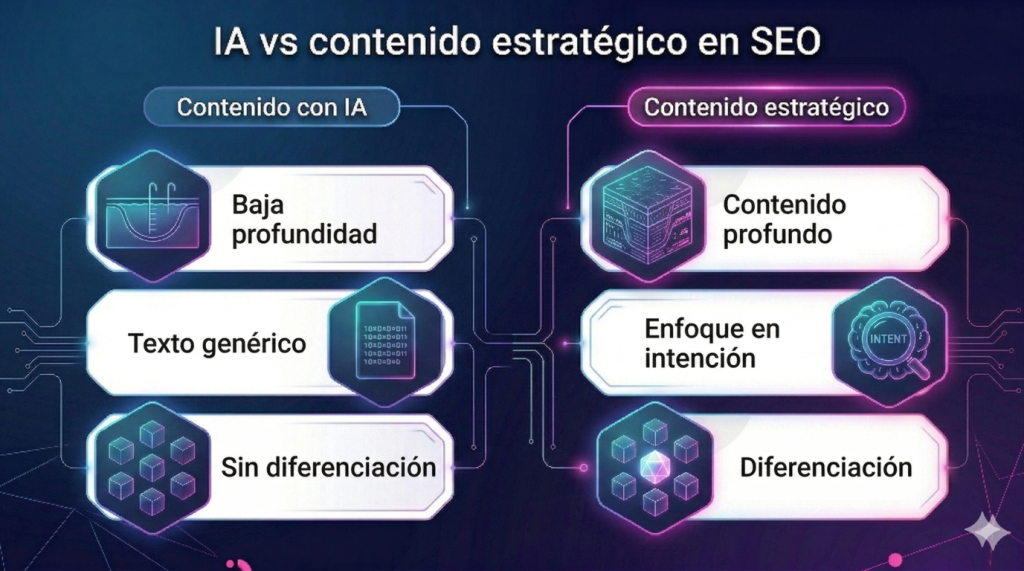
ChatGPT generates probable content based on patterns, not necessarily differentiated content. Professional prompts include information about what competitors are doing and what positioning you are seeking. The amount and type of competitive information you include dramatically affects the results you get.
Lack of Brand Consistency
Every brand has its own unique voice. Your prompts should include specific brand guidelines, but how to “code” those guidelines into language that ChatGPT will interpret consistently… well, that’s an art that is perfected with practice and a lot of trial and error.
Ignore Keyword Validation
ChatGPT may suggest keyword variations that sound super natural but that practically no one is searching for. That’s why we always, always validate suggested keywords against real research tools. This step is not optional if you want real results.
Adaptable Prompt Template
Here is a basic structure that you can adapt to your needs:
ROLE: Experienced SEO Specialist in [INDUSTRY]
TASK: Generate [NUMBER] title and description options for:
PÁGINA:
- Type: [blog/product/category]
- Topic: [CONCISE DESCRIPTION]
- Main keyword: “[KEYWORD]”
- Audience: [BASIC PROFILE]
REQUIREMENTS:
- Title: maximum 60 characters
- Description: 150-155 characters
- Include keyword in both
- Tone: [DESCRIPTOR]
FORMAT:
Option | Title (characters) | Description (characters)
This is your foundation. Professionals expand on it with additional elements based on the specific context, project objectives, and what we have learned from previous implementations. It is a solid starting point, but just that: a starting point.
Effectiveness Metrics
Generating meta tags with AI is great, but how do you know if they are actually working? The key indicators we monitor include:
- Organic CTR compared to your average position (if your CTR is low for your position, there is a problem)
- Changes in the ranking of your target keywords
- Engagement measured by time on page and bounce rate
- Conversions coming specifically from organic traffic
Our team sets clear benchmarks before implementing any changes and monitors results religiously. The specific testing methodology and exact numbers we look for vary depending on the industry and each client’s specific objectives.
The Human Factor in AI Optimization
Here’s the truth: no matter how sophisticated AI is, human judgment remains irreplaceable. The best results always come from combining ChatGPT’s speed of generation with:
- Real strategic experience in SEO and digital marketing
- Deep understanding of who your audience really is (beyond demographics)
- Knowledge of the competitive landscape and the particularities of your industry
- Brand intuition that only comes with years of experience
AI is an extraordinary tool, but like any tool, its effectiveness depends entirely on who is using it. The difference between basic results and results that really move metrics lies in the expertise behind the prompts.
Look, let’s be upfront with you: using ChatGPT to generate meta titles and meta descriptions is relatively easy. Anyone can do it. But mastering prompt engineering to get results that really impact your numbers… that’s a completely different story.
The fundamentals we’ve shared here will take you much further than simply asking ChatGPT to “write something.” But let’s be honest: there’s a reason this is our specialty. Building truly effective prompts requires not only technical SEO knowledge, but also experience in how AI interprets instructions, prior work in multiple industries, and that ability to iterate strategically that only comes with practice.
At SEOLab Digital, working with AI for meta tag optimization is only part of what we do, but it’s something we’ve become quite good at. We’ve refined our processes through hundreds of projects, different industries, and many iterations (some successful, others… valuable learning experiences, let’s say 😅).
If you feel there is a gap between the results you are getting with AI and the results you know are possible, you are probably right. And no, it’s not that you are doing something “wrong” — there are simply levels of sophistication involved that take time and experience to develop.
Would you like to explore how we could help you close that gap? Let’s talk. No hard sell or rehearsed pitches, just a real conversation about your specific challenges and how professional prompt engineering could help you solve them. Sometimes an hour of conversation with someone who’s been in the trenches can save you months of trial and error.
We’re here when you’re ready. 🚀
The fundamentals we’ve shared here will take you much further than simply asking ChatGPT to “write something.” But let’s be honest: there’s a reason this is our specialty. Building truly effective prompts requires not only technical SEO knowledge, but also experience in how AI interprets instructions, prior work in multiple industries, and that ability to iterate strategically that only comes with practice.
At SEOLab Digital, working with AI for meta tag optimization is only part of what we do, but it’s something we’ve become quite good at. We’ve refined our processes through hundreds of projects, different industries, and many iterations (some successful, others… valuable learning experiences, let’s say 😅).
If you feel there is a gap between the results you are getting with AI and the results you know are possible, you are probably right. And no, it’s not that you are doing something “wrong” — there are simply levels of sophistication involved that take time and experience to develop.
Would you like to explore how we could help you close that gap? Let’s talk. No hard sell or rehearsed pitches, just a real conversation about your specific challenges and how professional prompt engineering could help you solve them. Sometimes an hour of conversation with someone who’s been in the trenches can save you months of trial and error.
We’re here when you’re ready. 🚀